10 September 2012

Packaging Presentation

“O” Juice Bottle RATIONALE


Existing Juice packaging has many flaws. Many are difficult to open. Tetra paks contain straws that are hard to remove and insert. Pop top bottles encourage opening with teeth which can lead to damage.
The OJ juice bottle is a fun and quirky design for young children. It creates a unique and enjoyable way for children to drink juice.

The design consists of a unique “O” shaped bottle and an easy twist top. The bottle’s unique design is made for young children to enable ease of use through a comfortable and palpable “O” shape. This shape has been ergonomically designed to accommodate the 50mm hand width dimensions of 5 to 6 year olds. The large “O” shape allows easy grip and enables the children to tip the bottle up to drink with ease.

The lid comprises two parts. The white outer lid and the blue inner lid. These parts are connected with internal rings to prevent the top part of the lid being extricated and consequentially a choking hazard. The twist top lid has large ridges on the outside allowing children to easily twist the top up to drink, avoiding pulling, which can damage teeth. The inner lid has mini ramps which guide the outer lid when twisted to travel up and down, thus opening and closing  the lid. The twist top cap is water tight when closed.

The bottle and lids are made from food safe polypropylene. They have been designed with reuse in mind, as the bottle is refillable. When they do reach the end of their life, they are all the same material, and are easy to recycle.


18 August 2012

Focus group


The results of the focus group are as follows.

Issues:
- Straw too short
- Lid needs tamper seal
- Lid could pop open in bag
- Lid too large for bottle
- Change material of bottle
- Graphics could be a problem to apply

Posters:
- Tech drawing confusing
- Show how foil pack is made
- Target market is missing
- How does the product fit in a lunch box
- Use smaller images
- Use more written explanations

Improvements:
- Add age and target market
- State material and manufactoring processes
- Redesign lid
- Incorporate foil seal for freshness
- List advantages of the product on the posters

09 August 2012

Disassemble - Toaster Oven

The Project was to disassemble an appliance and work out how improvements could be made.
The three areas we looked into were, how to increase durability, how to make reparable and upgradable, and finally how to improve dissassembly so that the parts can be reused and recycled.
The photos below show our progress.


05 August 2012

The 11th Hour


 The 11th hour (2007) is a documentary produced and narrated by Leonardo DiCaprio, directed by Leila and Nadia Conners. The film interviews many independent environmental experts about climate change, what the causes are, what can be done and why humans are so slow to react. An early quote from Stephen Schneider sets the scene, “As we destroy nature, we will be destroyed in the process.” Several of the experts state that the human brain is the key to our survival, stating that humans are the only species able to think of the future. 
The somewhat typical binary of human-vs-nature is an underlying rubric to the argument flow of the documentary narrative, subverting the arguments of economic rationalism with quantitative research attesting the finite nature of Earth's resources. Conners' argument asserts that change began with the industrial revolution and the lessening of sunlight to survive, going on to explore our dependency on fossil fuels and an increasing dependency on globalised mass farming. 
The documentary rings home with all the radical changes in climate such as the floods, droughts, extreme hurricanes, highest average temperatures on record. A worst-case scenario for the future as stated by Stephen Hawking is that earth could become like its sister planet Venus, where the temperature is 250˚C and it rains sulphuric acid.
The earth is being radically changed in a short period of time, and our appetite for consumer goods that rely heavily on natural resources continues to grow. We are essentially poisoning the planet. The argument is compounded with, typically for infotainment, one of hope. We have a chance to fix this. We need to reconnect with nature. We have existing technologies to create green buildings and to retro fit pre 1950’s buildings that could reduce our carbon footprint by 90%. We need to redesign design. We need to change the thinking of products from cradle to grave, to cradle to cradle. In nature there is no waste. We need to have a passion for where you live.  
Documentaries like this serve perhaps as the exact type of passive project, ambitious of some mythical kind of proto-stimulation in the field that they criticise in their argument - basically a lot of rich people made this as a feel good product - placing the importance of human agency squarely on a working class who will probably never see this documentary.  

99.9999% of species are extinct. Humans can become part of that statistic. The earth will survive. Will we still be on it?

Image 
Video Link 

21 July 2012

Video Reflection - Packaging

 
After viewing the video series of both ‘How It’s Made: Packaging’ and ‘Giving Packaging a New Life’ the viewer is left with a solid understanding of how different types of packaging is made, and the recycling processes at the end of life.

The videos give a detailed view of the processes required for packaging from start to finish, including the recycling processes such as sorting and breaking down the packaging.
The aluminium packaging tubes was an informative video to watch. As I had little knowledge of how they were made before this video. It was interesting to learn that the tubes are made from a single disc of aluminium that was punched from a flat sheet. The disc is then fed into a press for impact extrusion, which creates the tube shape. The scrap aluminium from the sheet gets recycled into a new aluminium sheet, ready for the next set of discs to be punched. This process was relatively the same for the aluminium drink containers.

I was fascinated to learn how easily recyclable tetrapaks are. As they are made from laminated paper, plastic and foil I had assumed the process to recycle them would be difficult. Upon watching the video I learned it was a simple process of chopping the material up and adding water so the paper would swell and separate from the foil and plastic layers.

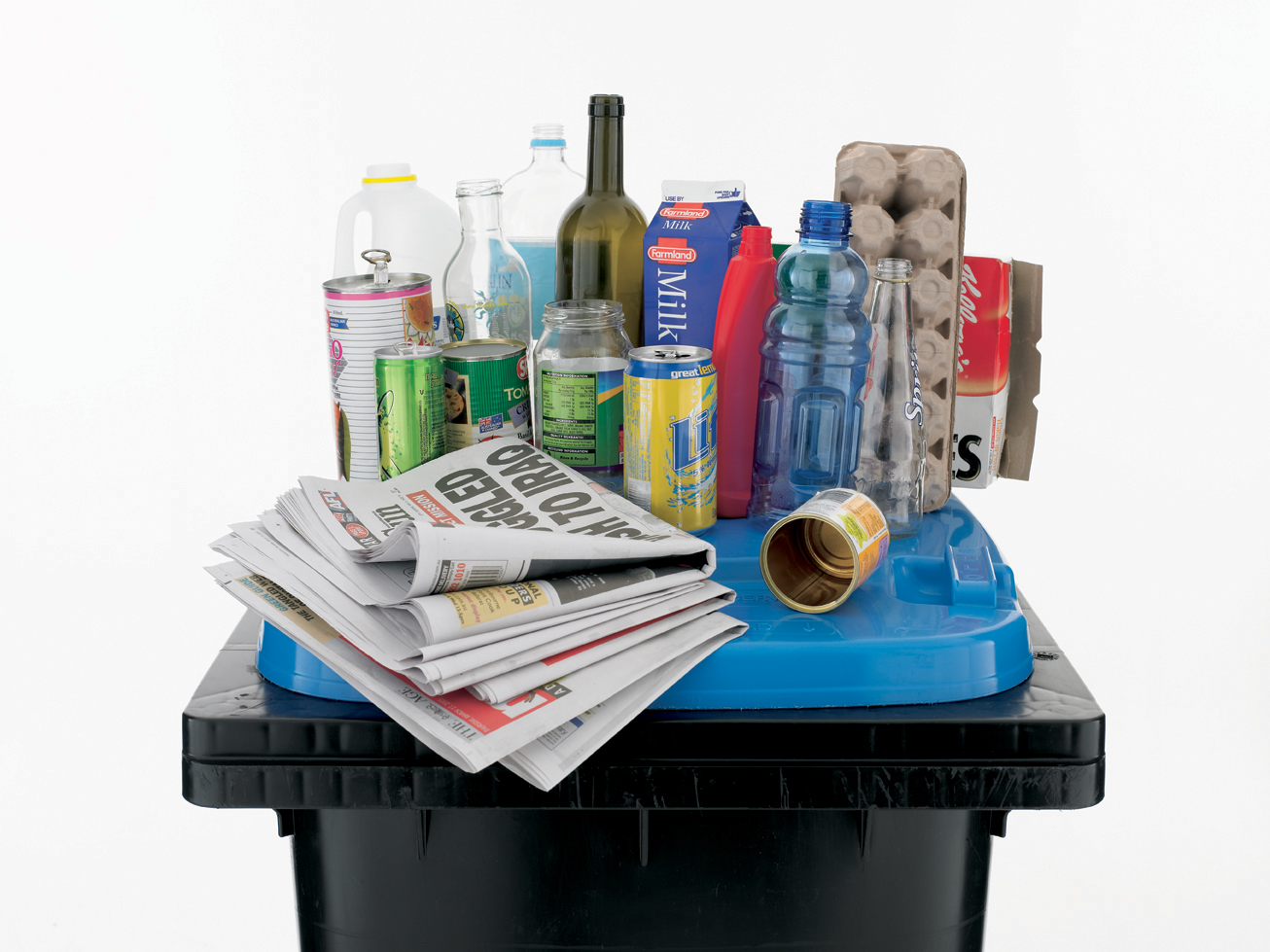
One thing I had always wondered was how recycling was separated, as at home, there is only one bin that all recyclable material is put in to. That question was answered in the final video for ‘Giving Packaging a New Life’. Thanks to relatively new combined recycling plants, this process is now easier and can save up to 50% of associated costs compared to separate recycling plants. The collected recyclables are sent to a combined recycling plant where they are emptied onto big conveyer belts. From these belts the contents are separated. Air blowers separate the lightweight plastic films into one section. Magnets are used to collect the metals and sieves remove the paper products. Infra red systems are used to detect composite packaging, such as tetrapaks, and channel a localised blast of air to separate these. Once the differing materials are separated they can be recycled accordingly.

It is important for designers to understand these processes as this knowledge enables the designer to consider the impact of the product they are designing, and whether there is a less environmentally intrusive way of bringing a new product to life.
This knowledge also creates certain dilemmas in the designing process. Whether the designer will choose glass packaging as this can be made from up to 90% recycled material saving energy in production and reducing the need for virgin material taken from natural resources. However, this type of packaging is heavy which leads to increased transport costs and carries the risk of the glass breaking leaving dangerous shards.


30 December 2011

03 September 2011